The most valuable fan moments are often the shortest. The clubs that win them make it easy to act.
Football has always been about feeling. A late goal, a new shirt, a derby win, or a title celebration can turn a casual scroll into an immediate urge to be part of the moment. The problem is that, for many clubs, the route from that feeling to a purchase still feels unnecessarily long.
A fan sees a post, clicks through, finds the product, creates an account, discovers that their membership is elsewhere, and then runs into a delivery or payment issue. By the time the journey is fixed, the emotion has moved on.
That is why football commerce is becoming a far bigger conversation than online retail. It now covers the whole relationship: merchandise, tickets, memberships, hospitality, content, customer service, and the social channels that bring fans in. The real question is not how to sell more shirts. It is about making the club easier to engage with whenever a fan chooses to do so.
The Opportunity Is Bigger Than Matchday
Football is already a global, year-round entertainment business. Supporters buy, watch, travel, comment, collect, and share long after the final whistle. The commercial opportunity follows them across markets, languages, and time zones.
The Football Commerce White Paper puts the scale in context: licensed sports merchandise is projected to reach US$59.38 billion by 2033, sports ticketing US$65.34 billion, and fan-engagement technology US$66.7 billion. Those figures are compelling, but they do not tell the whole story. Traffic alone is not the prize. Sports-commerce conversion has come under pressure even as mobile has become the leading purchase channel. Fans are arriving; too often, they are not being given a clean way to continue.
Three Figures Worth Watching
- US$59.38B: projected licensed sports-merchandise market by 2033.
- 2.8×: higher likelihood to purchase when fans receive personalized offers, according to the report.
- 73%: of fans expect sports brands to understand their individual needs.
A Club Can Be Everywhere, and Still Make Buying Difficult
The hidden cost is fragmentation. Retail may live on one platform, ticketing and membership on another, hospitality on a third, and loyalty, content, and customer support in their own systems. None of that is unusual, but it creates a strange experience for the person on the other side: every interaction can feel like a fresh introduction.
A club might know that someone bought a ticket last month and watched a video yesterday, yet fails to connect those signals when they come to buy a product. It can sell a shirt. It can sell a ticket. What it struggles to do is recognize the relationship between the two.
“Clubs can sell a shirt or a ticket, but they can’t orchestrate a personalized commercial journey. The result: low conversion rates on digital channels, generic communications, and massive untapped lifetime value.”
The answer is not a wholesale rip-and-replace exercise; it is a connected commerce foundation that lets the different parts work together. A composable approach gives clubs room to keep the specialist tools they need — commerce, ticketing, payments, fulfillment, content, data, and AI — without asking supporters to navigate those same boundaries.
The Moment Is Short. The Journey Should Not Be.
This matters most when the temperature is high. A winning goal, a kit launch, or a major signing can create a wave of attention in minutes. Those are not ordinary retail moments. They are emotional ones, and they do not last.
As Infracommerce puts it: “Fans are driven by emotion. Whether it’s after a big derby, a title, or a jersey launch… any of these can spark the decision to buy. That’s why the shorter the path between interest and checkout, the better.”
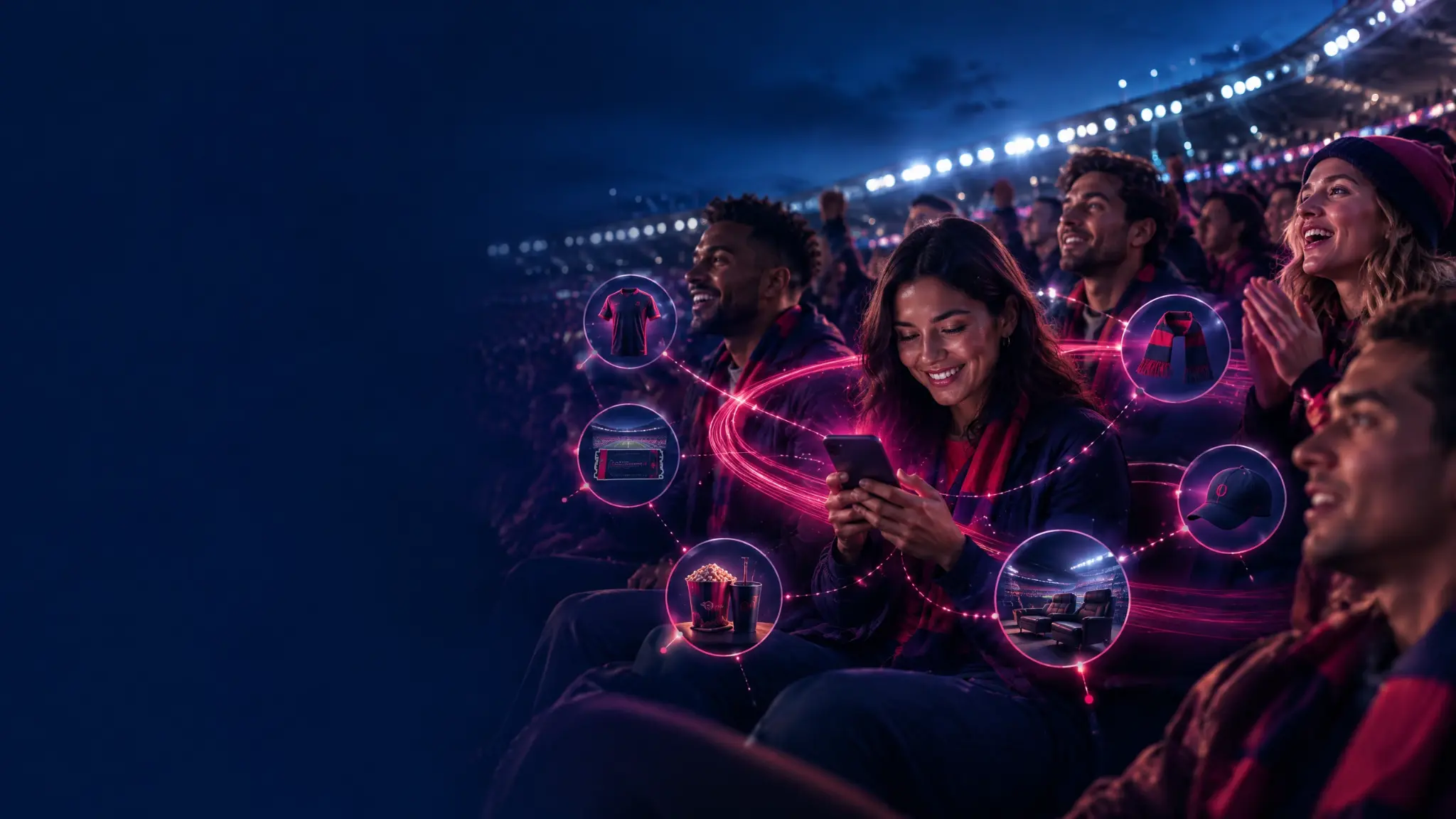
The practical applications are straightforward. A goal celebration can lead to a relevant jersey offer. A member can see an upgrade that reflects their status. A post-match message can bring together content, commerce, and service rather than sending the fan down three different routes. The point is not to turn every interaction into a hard sell. It is to avoid wasting a moment when a fan is already looking for a reason to act.
Personalization Only Works When It Feels Earned
Personalization has become one of the loudest promises in sports commerce, but fans know the difference between relevance and noise. A generic discount is easy to ignore, while a useful suggestion, made at the right time and grounded in an actual understanding of what a supporter values, is something else.
That understanding starts with a connected fan view. When ticketing, merchandise, content and engagement data sit in separate silos, a club sees several incomplete profiles. When the right signals can be brought together responsibly, it can serve people according to the things they genuinely care about: performance gear, fashion, collectibles, gifts, loyalty benefits, a local market or a particular point in the season.
AI can help, but it is not the strategy. It is useful when it makes the experience better: helping a fan find the right size, making support more responsive, surfacing an offer when demand is real, or giving a team the confidence to react quickly to what is happening on the pitch.
“Football clubs have always known how to create emotion. What AI now gives them is the ability to make that emotion personal, at scale.”
The Work Behind the Seamless Moment
The most seamless fan experiences are usually built on some unglamorous work. Platform performance needs to match demand. Inventory needs to be accurate. Fulfilment, customer service and content teams need to be ready for the same event, not working from different versions of it.
That is the operating-model challenge at the heart of football commerce. The shirt, the ticket, the membership and the message all need to feel like they come from the same club.
Football will always run on emotion. The commercial advantage lies in respecting it: making it easier to discover, easier to buy into and easier to carry into everyday life. Clubs that connect those moments will not just improve conversion. They will build a more useful, more durable relationship with the people who care most.
Discover the Full Report
Explore The Future of Football Commerce: Why the World’s Biggest Sport Clubs Are Rewiring Their Digital Infrastructure.
Source for the figures, quotations and strategic themes: VTEX, The Digital Transformation of Football Commerce.